The first marketing steps every new business should prioritize
Starting a business is exciting. You've got the idea, you've put in the work, and you're ready to help people. But assuming that people will show up when you’re finally open is dangerous, even if they’ve shown interest in the early stages of idea formation.
I've worked with a lot of small businesses and nonprofits at One Nine Design, and one of the most common patterns I see is organizations pouring everything into their product or service and almost nothing into getting the word out. Great work doesn't market itself.
That's where a strong marketing strategy comes in. It's what gets your name in front of the right people, builds trust, and keeps new clients or donors coming through the door. You don't need to do everything at once. You just need to start with the right things.
Here are the most important marketing steps to take when you're just getting started.
Establish a clear brand identity
Before you spend money on ads or post anything on social media, you need a clear brand identity. Everything else builds on top of this.
I see it all the time with clients who come ready to launch a website but haven't yet nailed down their brand. We end up pausing to work through it first, because without it, even a beautiful website can feel scattered and inconsistent.
Branding is a lot more than just a logo and a color palette. It's how your business communicates, what you stand for, and how people feel when they interact with you. It's what makes someone recognize you, whether they find you on Instagram, your website, or a flyer at a coffee shop.
At minimum, you want to lock down a professional logo (or design a logo if you're starting from scratch), your brand colors and fonts, a clear mission statement, consistent messaging, and a unique selling proposition (basically, what makes you different from everyone else doing similar work). Get these defined early, and every marketing decision afterward becomes much easier.
Experiment with Facebook Ads (when you're ready)
Facebook ads can get your business in front of a lot of people fast. But jumping in before you have any data or a clear plan is one of the quickest ways to burn through your budget without much to show for it.
Before you spend money on ads, you want some baseline information: Who is actually engaging with your content? What posts or messages are resonating? What does your audience care about? Ads amplify what's already working. If you don't know what's working yet, you're essentially guessing.
When you are ready to experiment, Facebook's targeting is genuinely useful. You can reach people by location, age, interests, behaviors, and demographics, which means you can get specific about who sees your ads instead of paying to reach people who will never be your customers.
For new businesses, start with awareness campaigns rather than direct sales pitches. Your goal at this stage isn't to close a sale. It's to help people get to know who you are and what you do. Think of it less as advertising and more as testing. Run small budgets, pay attention to what the data tells you, and adjust from there. Ads can absolutely be part of your marketing mix, but they work best as one piece of a bigger strategy, not the whole plan.
Understand search engine optimization (SEO) and how AI impacts your visibility
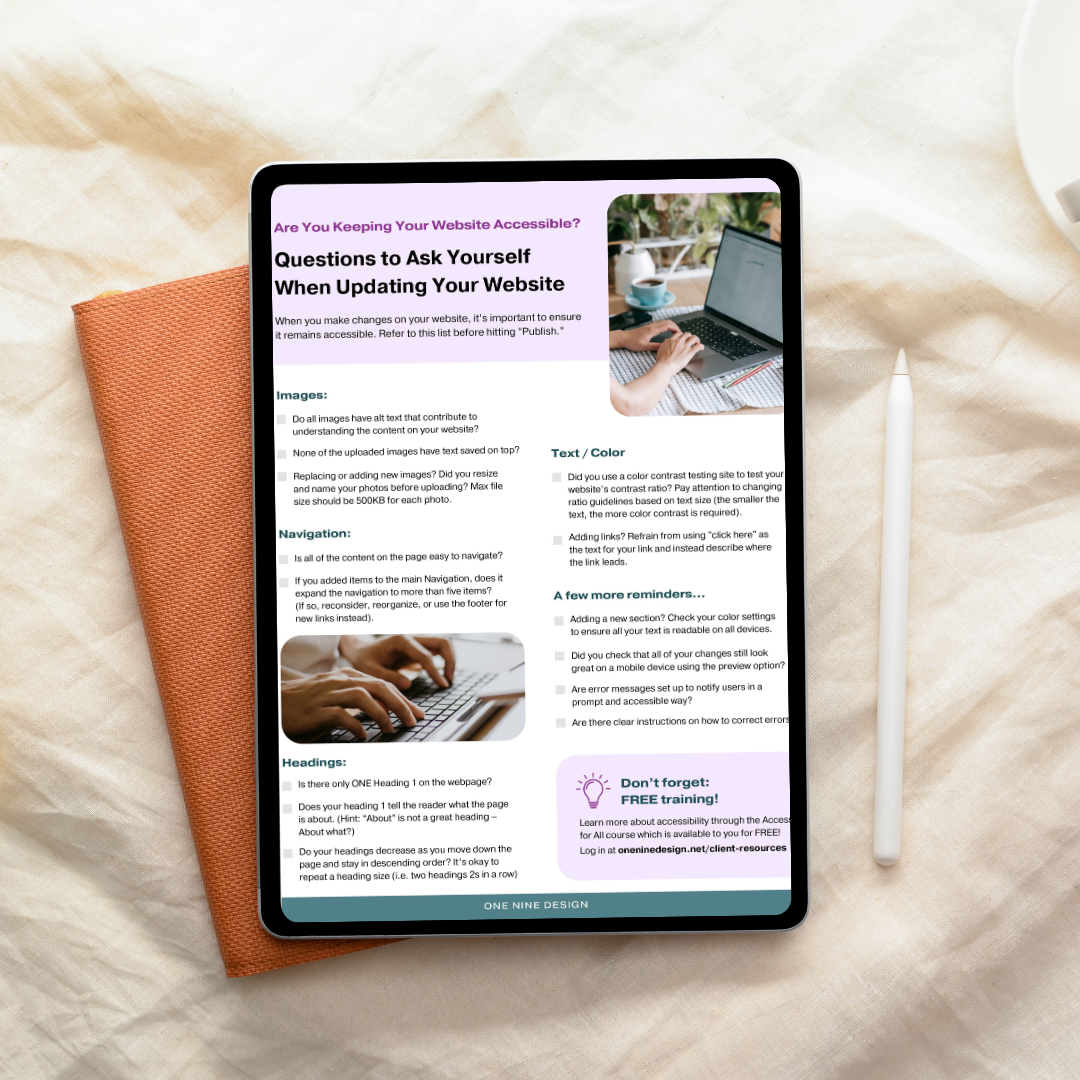
An example of a website accessibility cheat sheet all One Nine Design clients receive when we launch a new website
A social media profile is an easy place to start, but it shouldn't be your home base on the internet. Your website is the one marketing asset you actually own. Social platforms change their algorithms, shift their policies, and occasionally just disappear. Your website doesn't.
Beyond ownership, a well-built website with a solid SEO strategy is what creates long-term, sustainable visibility. SEO won't give you instant results the way ads might, but the work you put in compounds over time. Done consistently, it can give you a significant edge over competitors for years.
At its core, SEO is about understanding what your audience is searching for and creating content that genuinely answers those questions. That means researching the topics and keywords your potential customers care about, building pages that walk them through a clear journey, and establishing credibility over time.
And, as search continues to evolve, it's not just Google we need to please anymore. AI tools like ChatGPT, Claude, and others are now answering questions directly, and they're drawing from well-written, authoritative content across the web. If your site has clear, helpful content written for real humans, you're more likely to show up in those answers too. The good news is that the strategies that have always worked for SEO are the same ones that help AI tools understand and reference your content. Write for people first, and the algorithms follow.
One thing I emphasize with every client at One Nine Design is that an accessible website and a well-optimized website have a lot in common. Clean structure, descriptive headings, meaningful link text, and alt text on images all help screen readers navigate your site. They also help search engines and AI tools understand what your content is about. Making your website accessible isn't a separate checklist item. It's built into good web design, and it makes everything else work better.
Build an email list (and use it well)
Your email list is one of the most valuable assets your business can build, and the numbers back that up. According to Litmus, email marketing returns an average of $36 for every $1 spent, making it one of the highest-ROI channels available to any business, regardless of size.
But keep in mind that return only happens if people actually want to open your emails. And that starts with making sure your emails are worth opening.
The reason I've seen email work so well for small businesses and nonprofits is that it's a direct line to people who have already raised their hand and said they want to hear from you. Unlike social media, you're not competing with an algorithm. You're showing up in someone's inbox, which means you have a real responsibility to make it worth their time.
The best way to earn that trust is to lead with value. My own email list is a good example of this. Every email I send includes actionable marketing or website tips that anyone can implement, whether or not they ever work with One Nine Design. That's intentional. When your emails genuinely help people, they stay subscribed, they share your content, and when they do need your services, you're already the person they trust.
Many businesses grow their lists by offering something useful in exchange for an email address, like a free resource, a discount, or exclusive content. Whatever you offer, make sure your follow-up emails live up to that first impression. Consistent, valuable communication builds the kind of brand awareness and trust that no ad budget can buy. (Read more about how to use a lead magnet here)
Gather reviews and use social proof strategically
Trust is one of the biggest barriers a new business faces. When someone has never worked with you before, they're taking a leap of faith. Reviews and testimonials are what make that leap feel less scary.
The good news is that reviews do double duty. They reassure potential customers, and they help you show up in search results. Google considers the frequency, quality, and consistency of your reviews when deciding where to rank you locally. That means actively collecting feedback isn't just good for your reputation. It's good for your visibility.
The keyword there is "actively." Great work doesn't automatically generate great reviews. You have to ask. Make the process as simple as possible: a direct link, a QR code, a quick follow-up email after a project wraps. The easier it is, the more likely people are to actually do it. I've written more about how to use reviews to boost your local search visibility in this post, including specific strategies for getting higher quality feedback and making it work harder for your SEO.
Beyond Google and Yelp reviews, think about the other forms of social proof you can collect over time: written testimonials for your website, case studies that show your process and results, and user-generated content from happy customers. Each one adds another layer of credibility and gives potential clients a clearer picture of what it's like to work with you.
Key Takeaways
Marketing a new business can feel overwhelming, especially when you're also trying to actually run the business. But you don't have to do all of this at once.
Start with your brand identity, because everything else depends on it. Build your website and start thinking about SEO early, even if it takes time to gain traction. When you're ready, experiment with ads using real data. Grow your email list from day one and send emails worth reading. And ask every happy client or customer for a review.
None of these strategies are overnight wins, but together they build something that lasts. The businesses and nonprofits I've seen grow consistently over time aren't the ones that chased every new trend. They're the ones who showed up, stayed consistent, and genuinely tried to be useful to their audience.
That's really what good marketing comes down to: being helpful, being visible, and building trust before someone ever needs to hire you.
If you're not sure where to start, begin with your website. It's your foundation. One Nine Design works with small businesses and nonprofits to build websites that are designed to grow with you.